
A Safe Way to Remove Unwanted Embroidery
Embroidery can add personality to clothing, but sometimes an old logo, name, or decorative design no longer fits the garment. When that happens, removing the stitches may seem like the easiest solution. However, rushing the process can damage the fabric.If you are thinking about how to remove embroidery, the first step is to identify the type of embroidery and check the fabric underneath it.
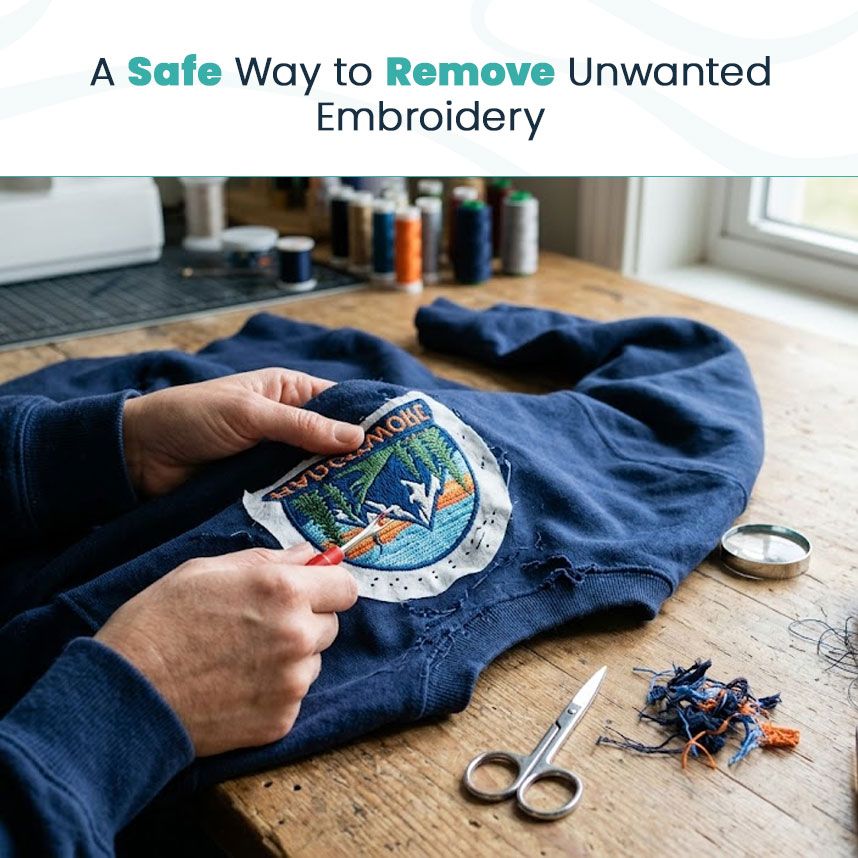
What You May Need?
Keep a few basic tools nearby:
- Small embroidery scissors
- Seam ripper
- Tweezers
- Lint roller
- Magnifying glass for tiny stitches
Avoid pulling large sections of thread aggressively. This can stretch the fabric or create visible holes.
Start From the Back
Turn the garment inside out whenever possible. You may see a bobbin thread, stabilizer, or backing material behind the design.Carefully cut a few stitches at a time using a seam ripper or small scissors. Work slowly rather than trying to remove the entire design at once.
Remove the Threads
After cutting the stitches:
- Gently pull the loosened threads with tweezers.
- Continue working through small sections.
- Remove the backing if it comes away easily.
- Use a lint roller to collect loose thread pieces.
Do not force anything that seems stuck.
Be Careful With Delicate Materials
Thick cotton or denim may tolerate careful stitch removal better than delicate fabrics. Silk, chiffon, lace, and lightweight knits can show marks or damage more easily.Before starting, test your tools on a hidden area if possible.
Check the Fabric Afterwards
Once the embroidery is gone, you may notice tiny needle holes or a slight outline where the design was placed. Washing or gently steaming the garment may help the fabric recover, depending on the material.If you plan to replace the old design with a new one, the new artwork should be prepared according to the garment and its fabric. Careful embroidery planning can help create a cleaner result and reduce the chance of repeating the same problem.